VALIDATING MY RESEARCH
At home, in college mess, at parties, in restaurants, and supermarkets, good food goes to waste every day.
Perfectly edible meals are discarded daily, while hunger continues to rise. Despite having the resources, India struggles to bridge the gap between abundance and need.

Research-
STATISTICS
We utilized some service design methods to pinpoint gaps in the existing system and craft a more optimized solution.
India ranked
111th
out of the 125 countries in the Global Hunger Index 2023.

Restaurant industry's substantial yearly production of
11.9 million tonnes of food waste.
16%
of India's population, are undernourished
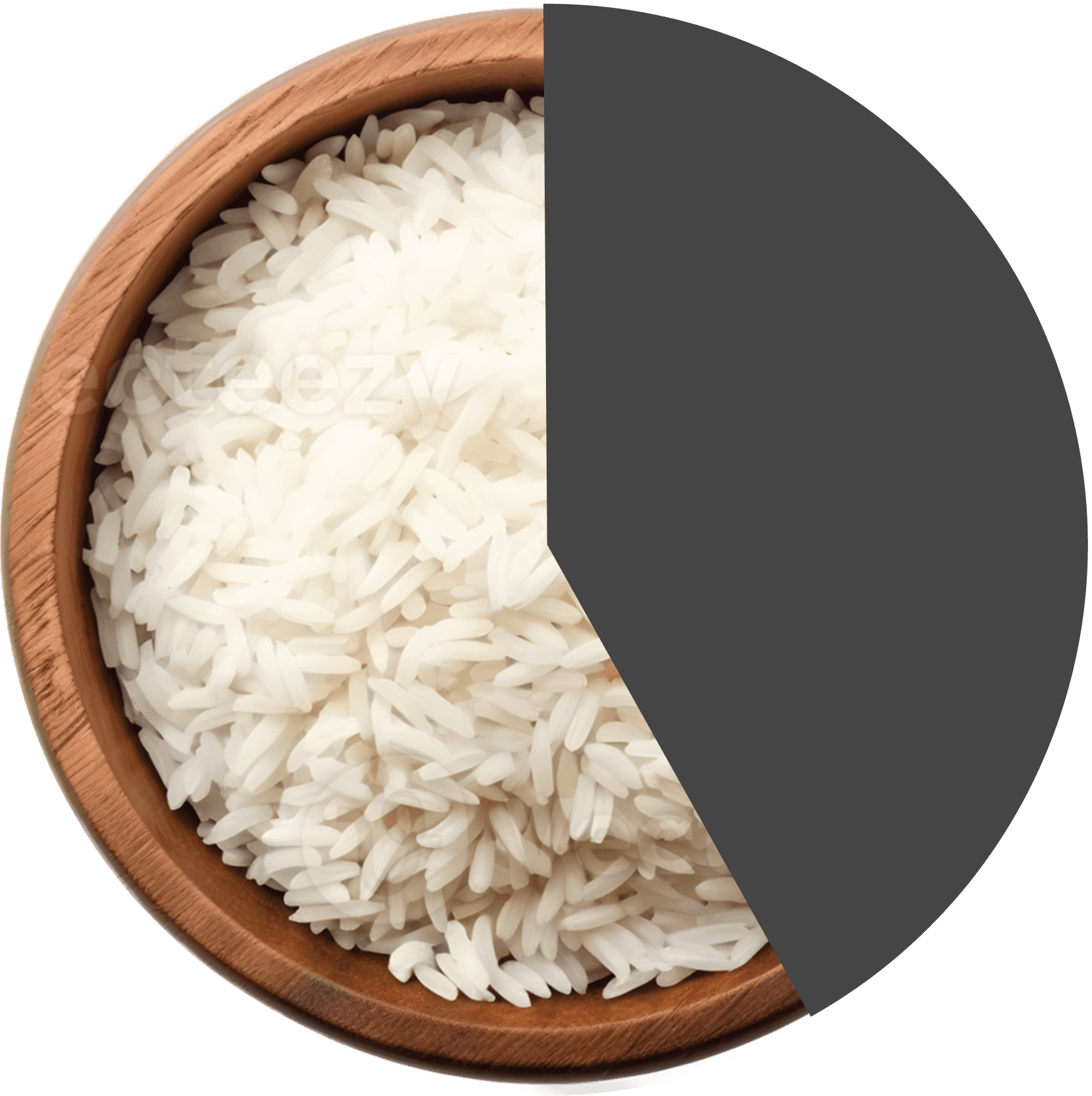
40%
of food generated goes to waste which is equal to the whole food intake in the UK
Overview of NGO Presence & Key Issues in India
There are over 3.7 million organisations registered in India under various non-profit categories.
In the Food & Nutrition sector, platforms list 1,400+ NGOs working across food-related causes.
Specific to surplus food distribution, at least 85 NGOs are part of the national “surplus food collection” network overseen by the regulator
QUESTIONS THAT SPARKED EXPLORATION
After understanding the stats and core issues through secondary research including India's alarming food waste and hunger rates, I began asking myself some key questions:
How do food donations usually happen in India?
How many organizations are actively working in this space?
Are people even aware of the food waste and hunger connection?
What are the challenges restaurants or individuals face when trying to donate?
Is there a system for real-time food matching or does most food go to waste?
How reliable or safe is the process of food collection and redistribution?
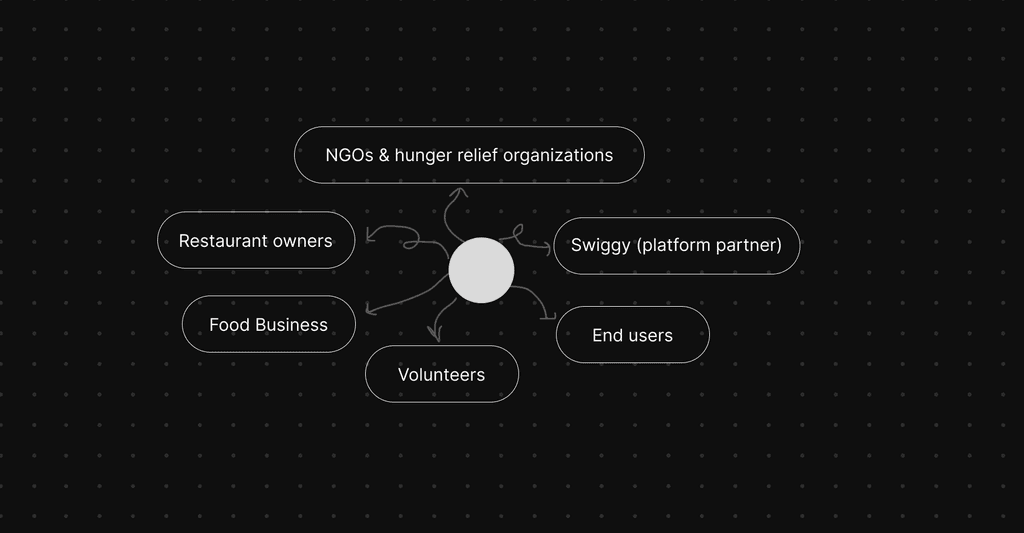
Further, I mapped out all the key people who could be involved in the food donation journey. This helped me understand different perspectives, uncover challenges, and design features that support real needs
WHAT WOULD MOTIVATE
ORGANISATIONS & RESTUARANTS TO DONATE?
Cost Efficiency
Donating surplus food reduces disposal and waste management expenses.
Tax Benefits
Eligible businesses receive tax deductions and credits for food donations.
Brand Reputation
Demonstrates social responsibility, enhancing public trust and visibility.
USER RESEARCH
To better understand the real-world challenges of food waste and hunger in India, I conducted surveys and user interviews with restaurant owners, diners, and nonprofit workers. These conversations helped uncover behavioral insights, logistical pain points, and community-driven motivations, shaping the foundation for a donation and community-based app designed to foster responsible food sharing and equitable redistribution.
INSIGHTS
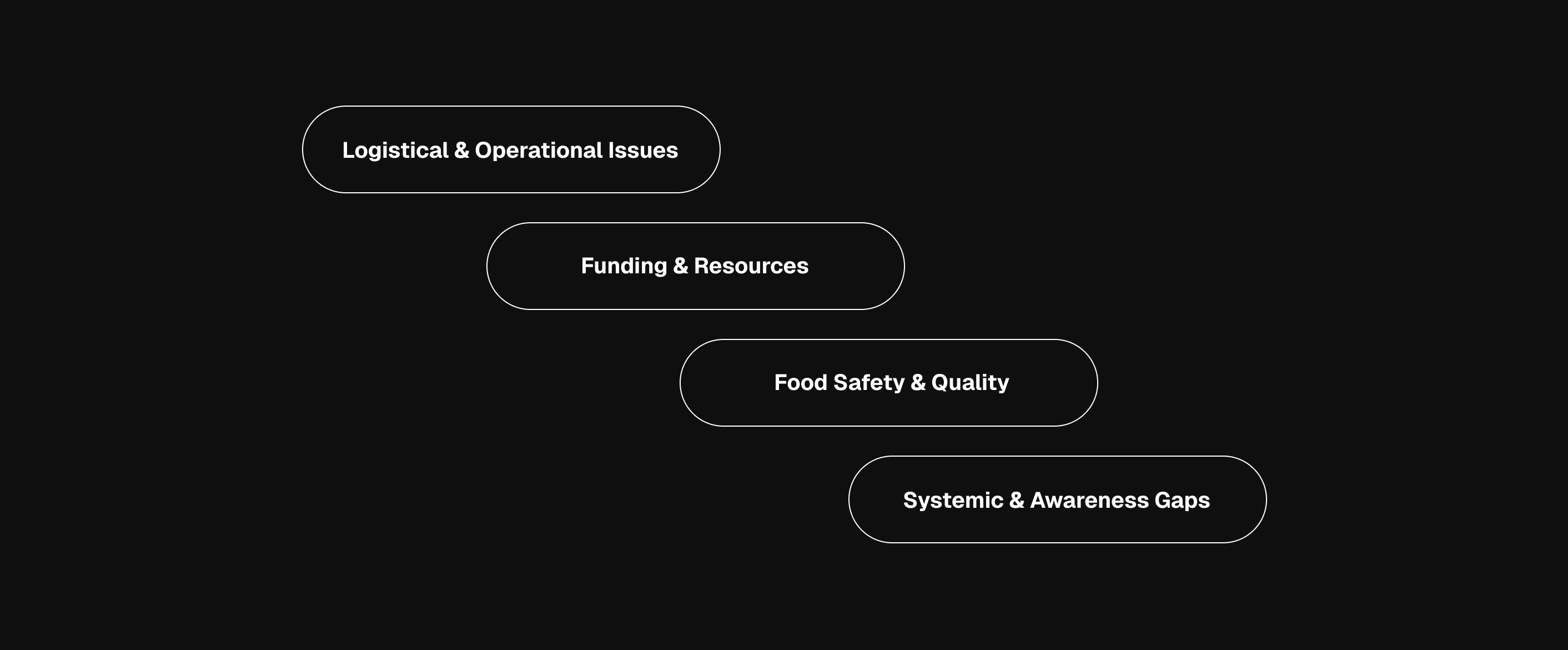
Lack of awareness
Many potential donors are unaware of how or where to donate.
Maintaining food safety standards
Ensuring hygiene and quality during transit and handover.
Transportation logistics
Coordinating timely pickups, especially from multiple locations.
Trust issues
Donors may hesitate due to concerns over how food is used or perceived.
How might we create a seamless and trustworthy platform that connects food donors, NGOs and volunteers, to reduce food waste and hunger, while encouraging community participation and social responsibility?
Build a reliable network of verified donors, NGOs, and volunteers
Use real-time tracking for pickups and deliveries to ensure transparency.
Encourage participation through incentives and social recognition.
THE BIG QUESTION?
BUT WHY ZOMATO?
Swiggy already connects millions of restaurants, delivery partners, and customers across India. Its existing infrastructure makes it the perfect bridge between surplus and need allowing food to reach people faster, safer, and smarter.
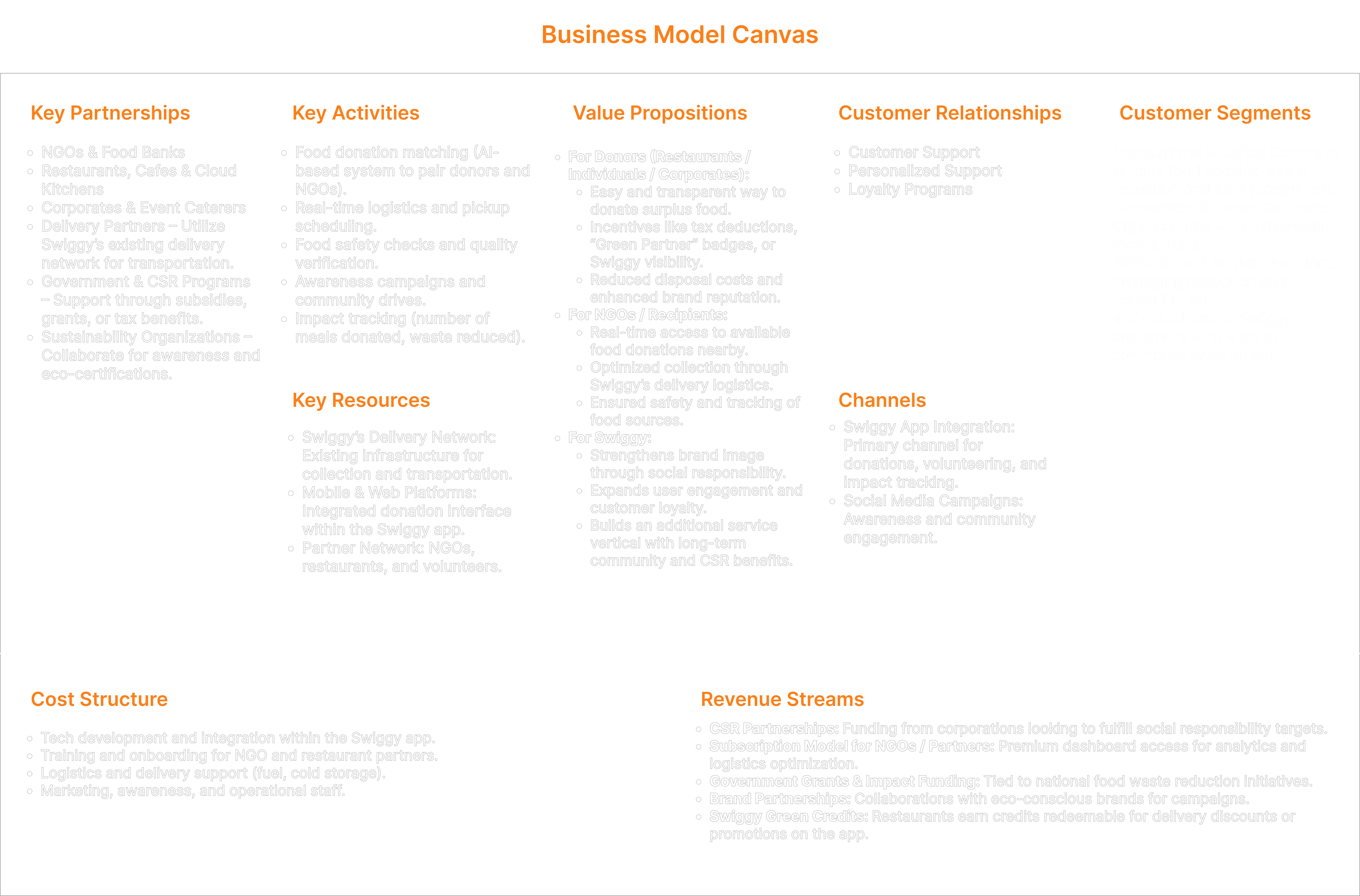
After defining how the system functions, I created a Business Model Canvas to further understand how Swiggy Serve would operate as a sustainable ecosystem.
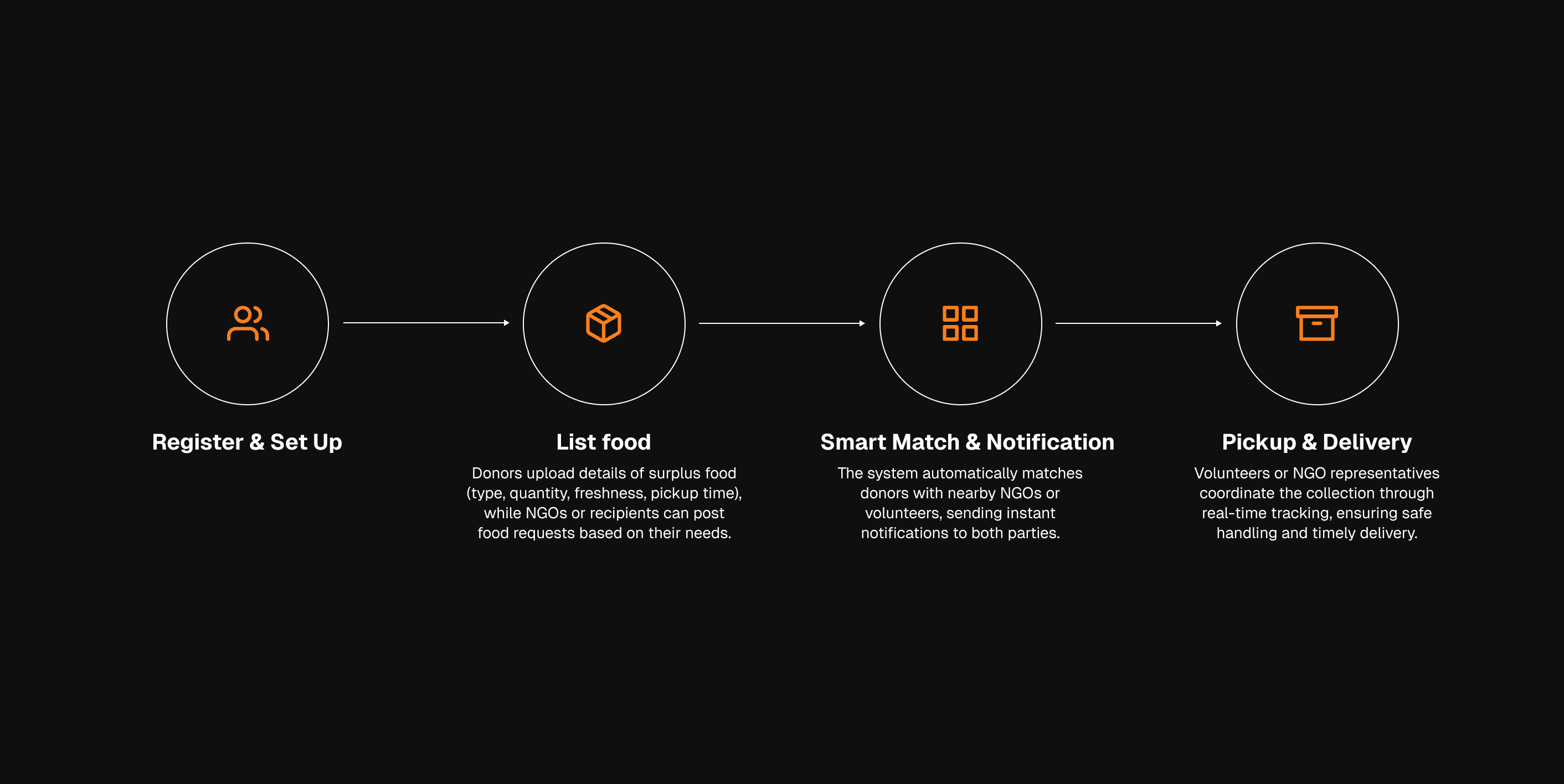
HOW EXACTLY WOULD IT WORK?
Outcome
USER FLOW
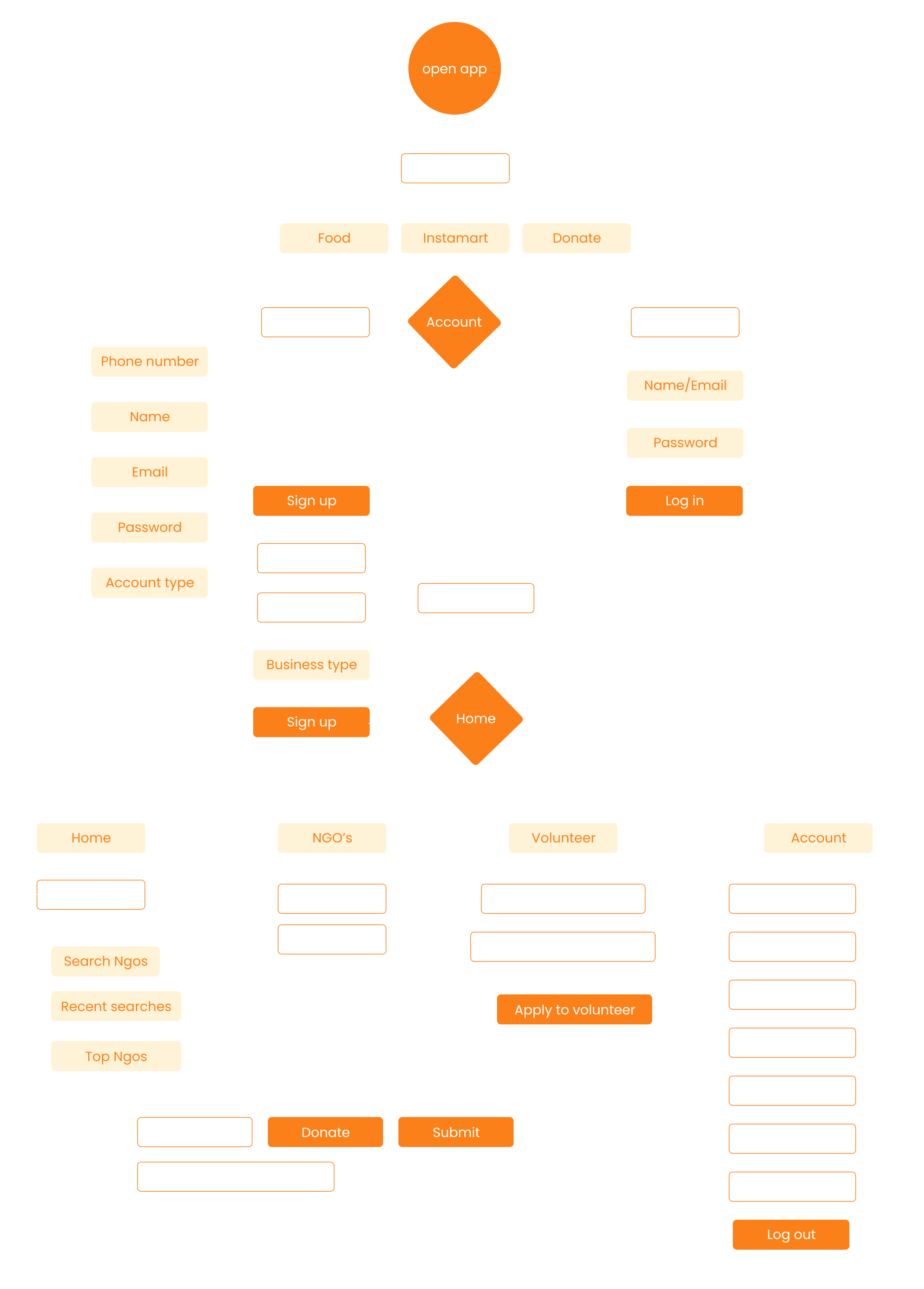
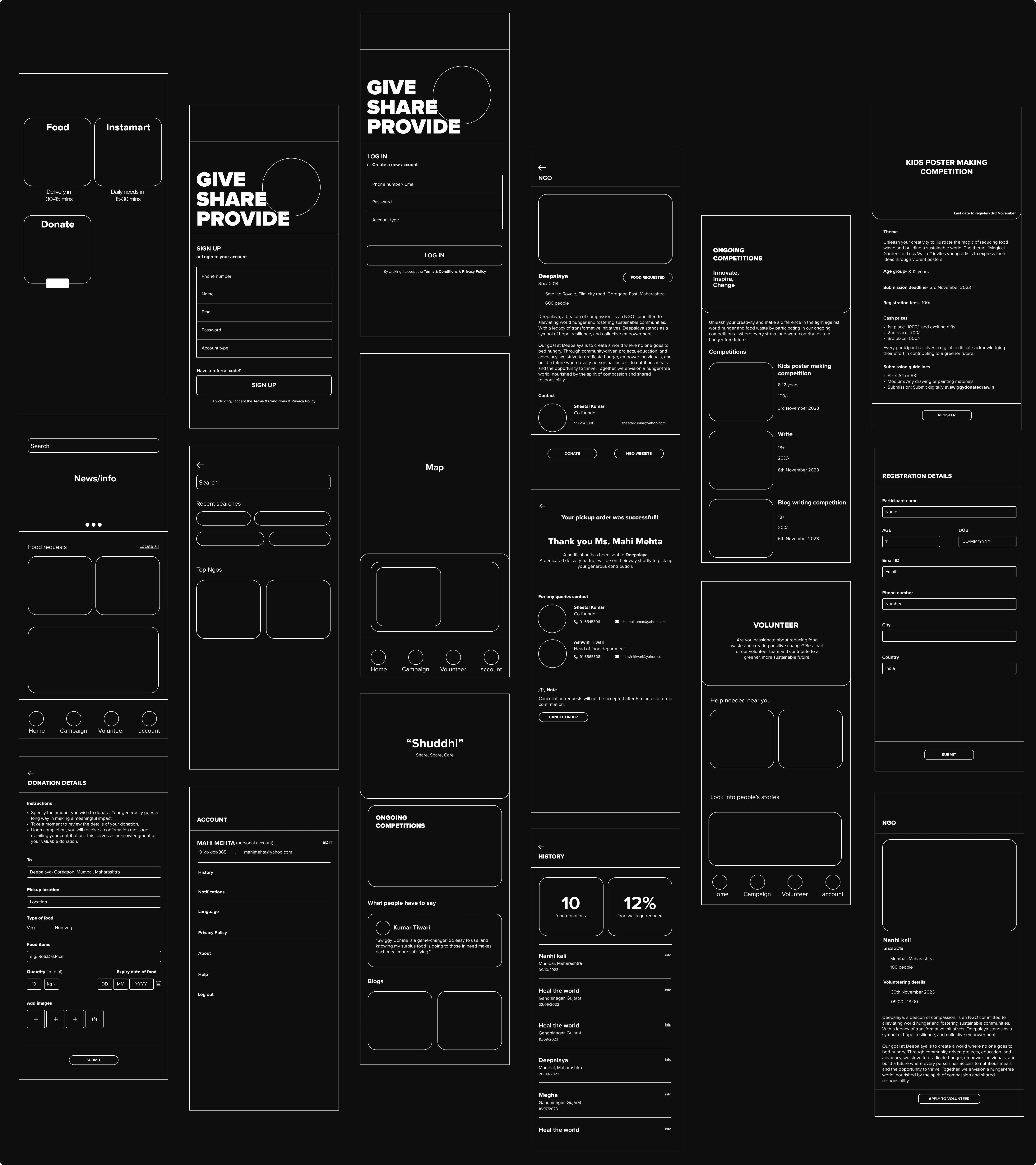
LOW-FED WIREFRAMES
Light | Regular | Medium | Bold
The font used in this app is aligned with the standard typography of the original Swiggy app, ensuring a cohesive and recognizable design language
ABCDEFGHIJKLMNOPQRSTUVWXYZ
abcdefghijklmnopqrstuvwxyz
1234567890!@#$%^&*

#FC8019
#FFD701
#D9DADB
#000000
Introducing
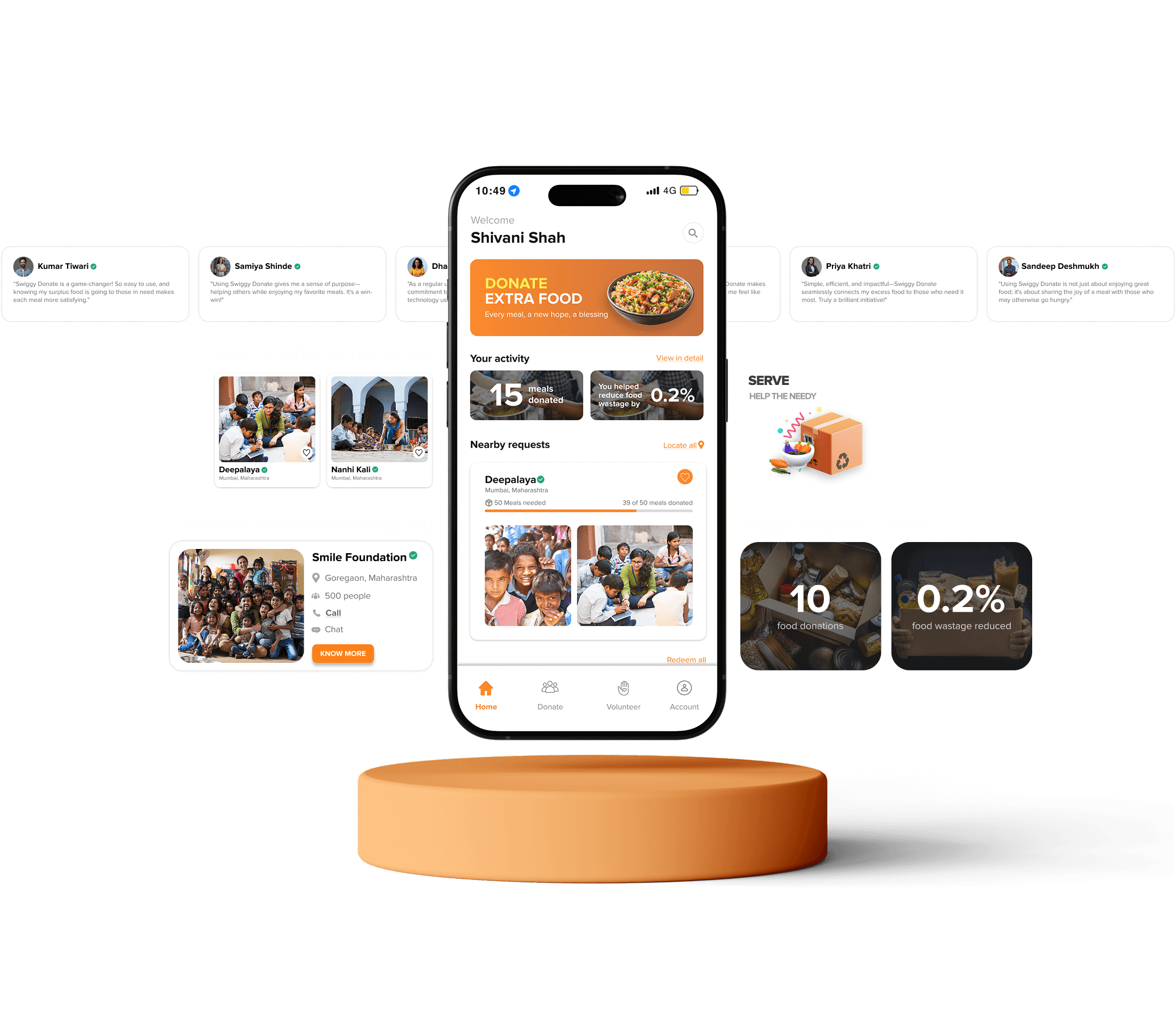
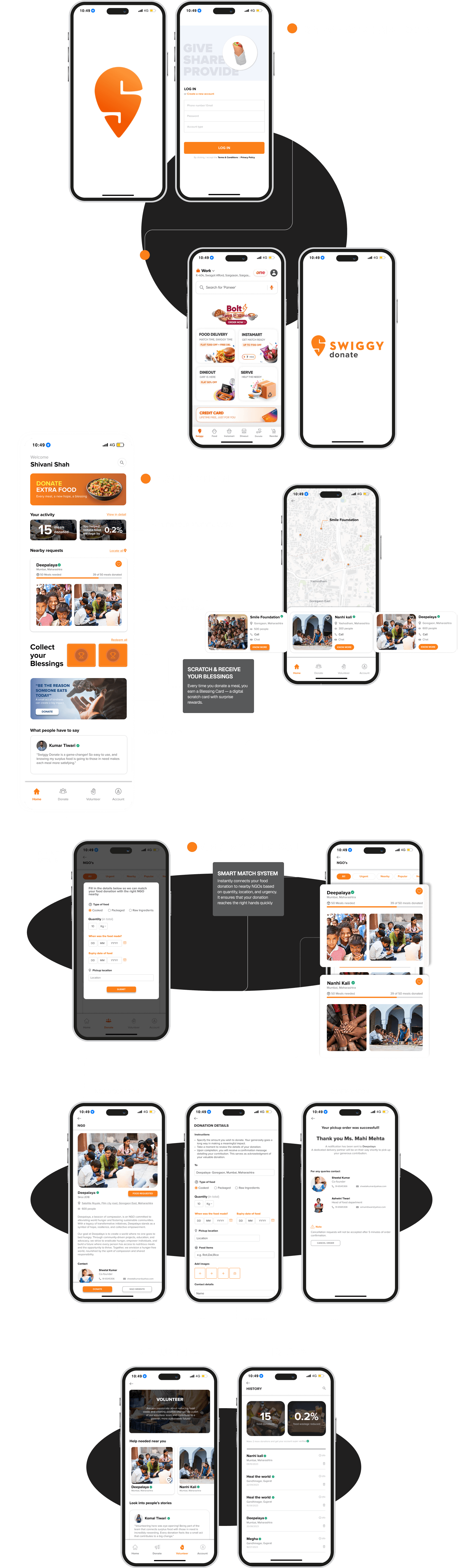
Hi-fidelity Wireframes